Header Design
calendar Loading date...

We believe that diversity is part of the natural human community

Join Us

We believe that diversity is part of the natural human community

Join Us

We believe that diversity is part of the natural human community

Join Us

Home >> Interaction Patterns

Interaction Patterns


The characteristics that lead to Autism Spectrum Disorder affect social interaction, such as difficulty recognizing social cues and knowing when to speak or listen, in addition to facial expressions that are hard to interpret, which often results in social isolation.
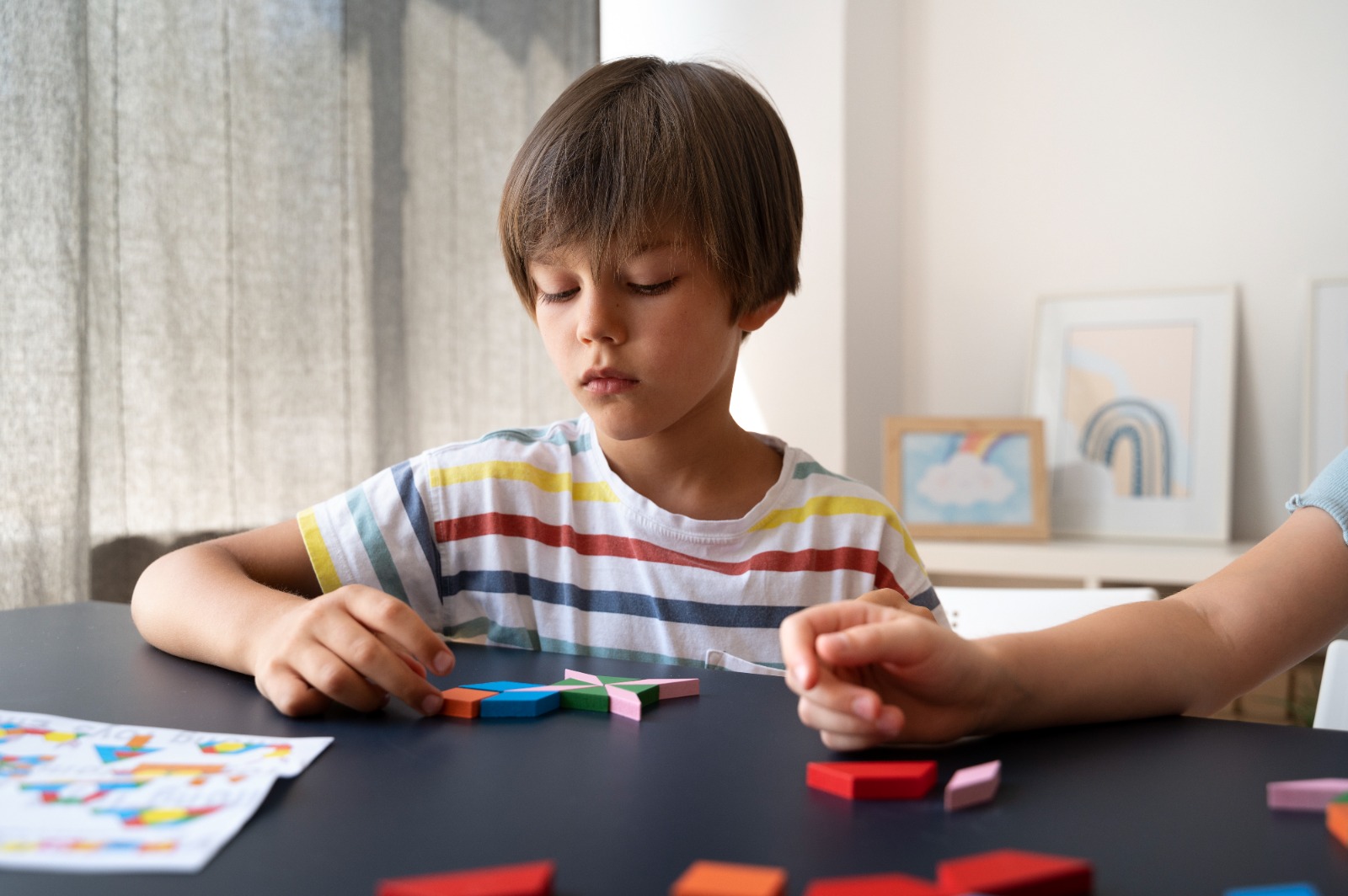
  • Some children with Autism Spectrum Disorder may not be able to communicate using speech or language, while others may have a rich vocabulary and be capable of speaking in great detail about specific topics.
  • Children with autism have difficulties with the meaning and rhythm of words and sentences. They may also struggle to understand body language and the meanings of different vocal tones, which affects their ability to interact with others.
Below are some patterns of language use and behaviors that are often found in children with autism spectrum disorder

Repetitive or rigid language:

Children with autism spectrum disorder often say things that don’t make sense or aren’t related to conversations they’re having with others. For example, a child might repeatedly count from one to five times during a conversation that isn’t about numbers. Or, a child might constantly repeat words they’ve heard, a condition called echolalia.

Echolalia occurs when a child repeats words that someone has just said. For example, a child might respond to a question by asking the same question. Another condition, called delayed echolalia, is when a child repeats words heard earlier. Some children with autism spectrum disorder speak in a high-pitched voice, sing a song, or use robotic-like speech. Other children use phrases to start a conversation. For example, a child might say, “My name is Tom,” to start talking to friends or family.

Repetitive or rigid language:

Some children are able to deliver an in-depth monologue about a topic that captures their interest, even though they may not be able to engage in a two-way conversation on the same subject. Others may have musical talents or advanced abilities in mathematical calculations.

Delayed Language Development

Children with Autism Spectrum Disorder may possess some speech and language skills, but these are not at the level of typical ability, and their progress is usually uneven. For instance, a child with autism may be able to read words before the age of five but may not understand what they have read. Often, a child with autism does not respond to others’ speech and may fail to answer to their own name. As a result, these children are sometimes mistakenly thought to have a hearing problem.